Investment Insights — Week of November 9, 2026
Video
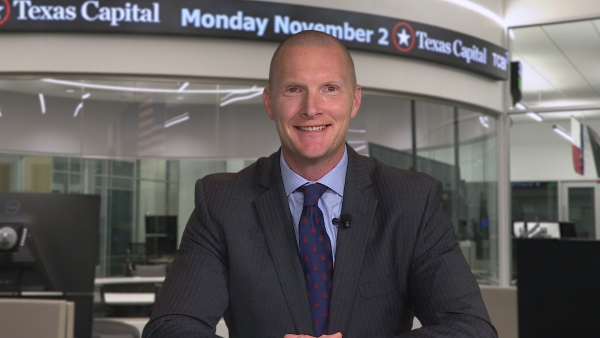
Hi, I'm Tim Gereg, Head of Capital Solutions at Texas Capital.
Last week had no shortage of headlines: a midterm election, a sharp selloff in tech and a blowout jobs report. The rates market reacted to all three. Let's dive in.
Tuesday's midterms brought a sweep for the Democrats, who took control of both the House and the Senate. The outcome was in line with the market's base case, but the magnitude of the win was surprising. Treasuries rallied Wednesday as the market priced in gridlock between a Democratic Congress and a Republican White House, particularly as a divided government makes spending packages harder to pass, and deficits have been a key focus for the bond market this year. One of the biggest moves last week was in oil. On Wednesday, the vice president publicly blamed the Iran war for the midterm losses, which the market interpreted as lowering the odds for any near-term reescalation in the Middle East. WTI fell more than 8% that day alone, and Brent had its deepest weekly decline in years, ending the week back below $100.
On Thursday, the post-election rally in equities reversed hard on worries that the election results, including several key governors races, particularly here in Texas, will slow the AI and data center buildout. The S&P had its worst day since April 2025, and the Nasdaq 100 fell over 6%. It's now down nearly 14% from its October 6 highs. Deflected quality bid took the two-year below 4.50% and the 10-year towards 4.80%, the lowest levels in almost two months.
Then, Friday's jobs report reversed part of that move. Payrolls came in at 165,000, more than double the 65,000 expected, and above every one of the 79 estimates in Bloomberg survey. The prior two months were revised up by 84,000, and unemployment dipped to 4.1%. All in, Treasury yields still finished the week lower, with the two-year at 4.51% and the 10-year at 4.86%. 2s10s bull steepened, ending the week at +35 basis points.
My sense is that last week only reinforced the case for a December rate hike. If anything, Friday's report raised the bar, albeit slightly, for the Fed not to take action. This week's inflation data is the next test. Consensus for tomorrow's CPI is up 0.3% on headline and 0.2% on core. Because of last year's government shutdown, there is no October '25 index, so the BLS will publish only monthly changes, not the year-over-year figures. Even so, Warsh has been unmistakably clear that inflation has been running above target for nearly six years, so I don't expect one print to change the Fed's past next month, and last week's job print certainly gives them the latitude to act.
As of Friday afternoon, the market is pricing in about a 75% chance of a December hike and one more by mid-2027, followed by a protracted hold. All things considered, this seems fairly priced based on the world as we know it today. That's it for this week. Let us know how we can help.
Connect with an expert banker.
Experience more with skilled bankers who are committed to helping you grow.
Additional Insights
Economy
Investment Insights — Week of November 2, 2026
<p>Watch the Investment Insights video for the week of November 2, 2026, from our expert, Tim Gereg.</p>
Economy
Market Insights Recap — Week of November 2, 2026
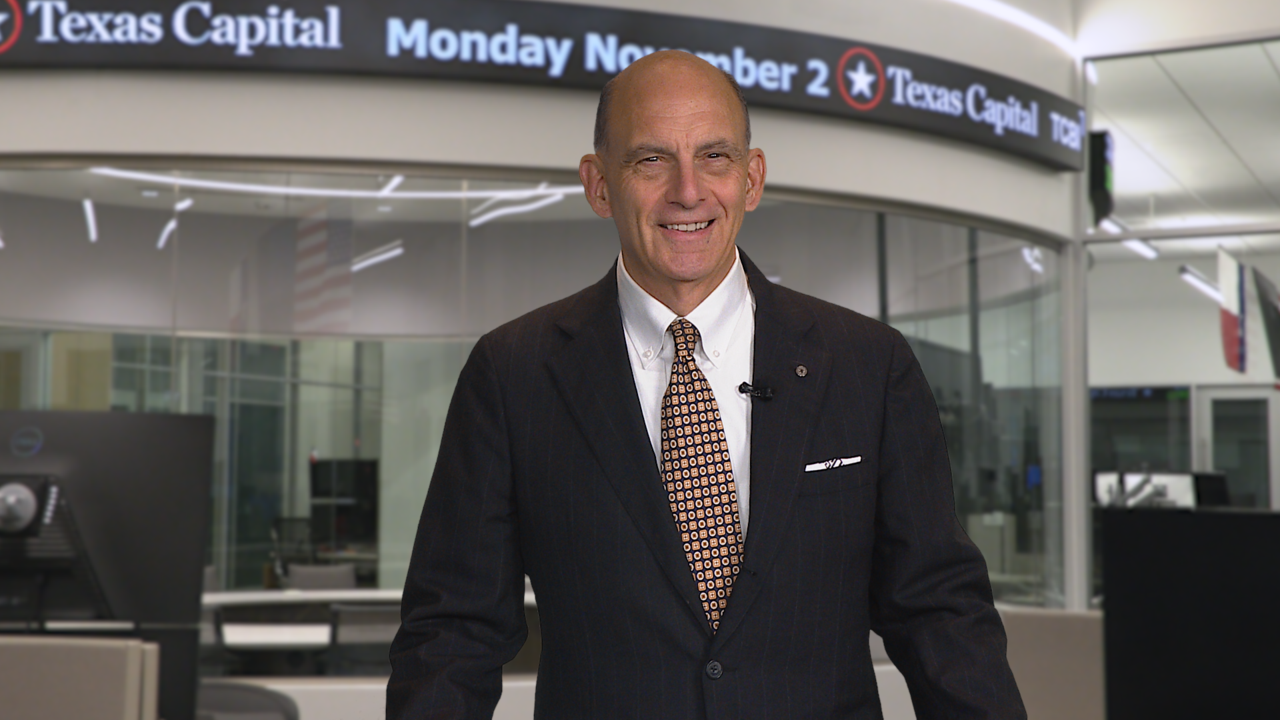
<p>Watch the Market Insights video for the week of November 2, 2026, from our expert, Steve Orr.</p>

Economy
Standing still while prices rise — Fed Meeting of October 28, 2026
<p>Still fighting inflation but not this week…</p>