Investment Insights — Week of October 5, 2026
Video
Hi, I'm Tim Gereg, Head of Capital Solutions at Texas Capital.
Last week brought a slew of economic data and fresh highs in the long end of the Treasury curve. Let's dive in. The two-year Treasury fell three basis points to 4.82%, finally snapping a six-week streak of higher yields. The 10-year Treasury rose 12 basis points to 5.28%, its fifth straight weekly increase after touching 5.34% on Thursday, the highest since April 2002. 2s10s steepened 15 basis points on the week to just over 44 basis points. On Wednesday, we received the August PCE data with a slight twist. As part of its annual update, the BEA changed its methodology across three specific categories, which most economists and even the Fed Chair anticipated would shave about 20 basis points off of the annualized core PCE. The actual revision took off slightly more, just over 30 basis points. July's core PCE was revised down from 3.3% to 3.0%, and August held flat at 3.0%.
To be sure, this is new math, not cheaper prices. Considering these revisions, there was effectively no progress made on inflation in August. Also on Wednesday, Q2 GDP was revised upwards to 2.2% from 1.5%. On Thursday, ISM Manufacturing was down one-tenth, but prices paid jumped nearly seven points to 77.9. Friday's jobs number was the bigger surprise. Payrolls came in at just 29,000 versus 90,000 expected. This was lower than all of the 180 economists surveyed by Bloomberg. The decreased headline print was primarily driven by the government and leisure and hospitality sectors. As expected, last month's monster print of 162,000 was revised downward to 133,000. That took the two-month payroll revision down from +55,000 to -60,000. Unemployment ticked up to 4.2% and wages rose just 0.1%.
The employment report does slightly raise the bar for the Fed to hike at the end of this month, the odds of which are currently just above 20%. My own expectation was for the Fed to hike three times this year, essentially reversing the insurance cuts that were delivered at the end of 2025. That seems like a very logical assumption, given that a key reason for Warsh's hawkishness has been that inflation has been above target for nearly five and a half years. But, as two core members of the FOMC, John Williams and Philip Jefferson, came out last week, both giving a significant nod to a pause this month, we should certainly pay attention. And this is despite the fact that a pause right before the midterms may be construed as being politically motivated.
Switching over to oil, Brent finished the week slightly lower, near $102. On Friday, the G7 agreed to consider releasing up to 100 million barrels of emergency oil and diesel reserves. Still no material developments with Iran and despite the midterms quickly approaching, it does not seem like a resolution is at hand. That's it for this week. Let us know how we can help.
Connect with an expert banker.
Experience more with skilled bankers who are committed to helping you grow.
Additional Insights
Economy
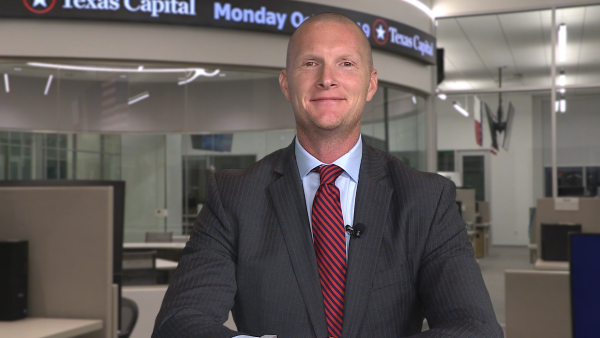
Investment Insights — Week of October 19, 2026
<p>Watch the Investment Insights video for the week of October 19, 2026, from our expert, Tim Gereg.</p>
Economy
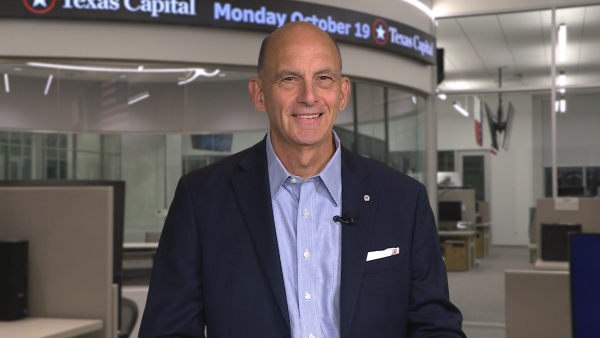
Market Insights Recap — Week of October 19, 2026
<p>Watch the Market Insights video for the week of October 19, 2026, from our expert, Steve Orr.</p>
Economy
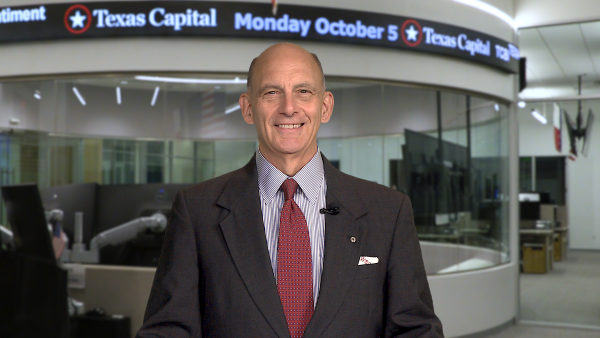
Market Insights Recap — Week of October 5, 2026
<p>Watch the Market Insights video for the week of October 5, 2026, from our expert, Steve Orr.</p>