Mortgage-Backed Securities Insights — Week of August 3, 2026
Video
Hi, I’m Jerry Levy, Managing Director of Texas Capital’s Mortgage Security Sales and Trading.
Well, we’ve learned a few things in the last few weeks. Geopolitical decisions and events are influencing and deciding the price of oil and other commodities tied to oil which, in turn, is determining where inflation, CPI and jobs will be heading. Does the pause and return to ceasefire continue? Does this weekend’s TACO hold? Will the Strait of Hormuz reopen? These questions have a direct effect on current inflation, future inflation and future inflation expectations, which, you guessed it, feed back into actual future inflation. I — we — cannot answer these questions with any certainty.
Brent crude started the year at $60 a barrel and three times has exceeded $110 a barrel; it is now back to the low 80s. We learned from the FOMC last week and the Chairman’s press conference that the committee is divided nine to three whether to hike now. Price stability is the Chairman’s overriding aim, yet he is willing to allow at least another month before a hike. The market was pricing in at one-in-three probability of a hike before the meeting in July and has moved to an almost 70% chance of a hike in September.
The Chairman will be speaking at Jackson Hole in August — that will be our next opportunity to learn what path the Fed will be taking for the remainder of 2026. Remember, the lack of transparency is intentional. The reliance he wants is to be on upcoming data — jobs, inflation, PCE — and this, combined with the slowdown in existing home sales and the softening in home price appreciation, is now facing an increased issuance of T-bills and notes to refinance the existing federal debt.
AI-related issuances already passed 500 billion this year, skewed to the longer end of the curve, which is crowding out government borrowing and adding pressure to the long end of the U.S. Treasury market. The 30-years hit a high yield of 5.27 last week — that’s the highest yield since 2007. From Ed Yardeni at Yardeni research, quote: “President Trump speaks every day, and every day he says something that seems to have an effect on the market.” The economists from Fundstrat summed it up differently: “President Trump has the market in a chokehold. The President isn’t supposed to have such an extraordinary amount of control over the fortunes of the stock market. It is completely unprecedented.”
For most of the last 15 years, every macro shock was met by lower rates, more liquidity and an expanding Fed balance sheet. Today, inflation risk, geopolitical instability, housing shortages and an unprecedented federal debt level constrain policymakers in ways that did not exist in prior cycles. The result is a structurally different environment for both fixed-income and housing-related assets.
Back to rates: The last time we had the greater than 5% long-bond yields for an extended period was 2007. At the time, total gross federal debt totaled under 9 trillion, which was a 62% debt-to-GDP ratio. Today: 40 trillion and a debt to GDP ratio over 122% — that’s double the rate in 20 years. That is the real constraint to policy alternatives.
Consumer spending has slowed but remains positive; labor markets have cooled without a significant rise in unemployment; business investment has remained surprisingly resilient; and consumer sentiment, as we learned last week, is at a five-month high. Volatility remains high — we are all waiting for the incoming data. Thank you for listening. Please go to Texas Capital’s LinkedIn page for all of our updates; until next time.
Connect with our team.
Experience more with skilled bankers who are committed to helping you grow.
Additional Insights

Economy
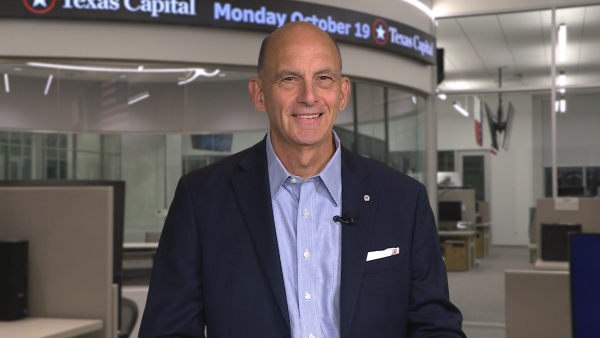
Investment Insights — Week of October 19, 2026
<p>Watch the Investment Insights video for the week of October 19, 2026, from our expert, Tim Gereg.</p>
Economy
Market Insights Recap — Week of October 19, 2026
<p>Watch the Market Insights video for the week of October 19, 2026, from our expert, Steve Orr.</p>
Economy
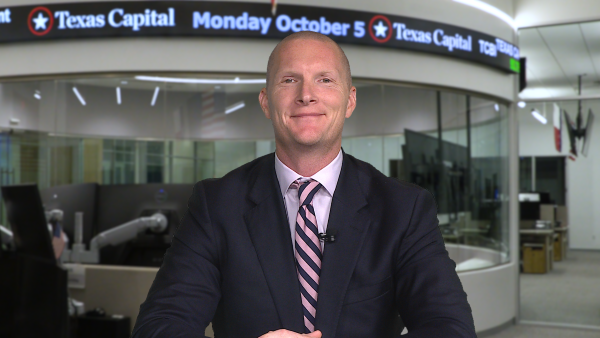
Investment Insights — Week of October 5, 2026
<p>Watch the Investment Insights video for the week of October 5, 2026, from our expert, Tim Gereg.</p>