Investment Insights — Week of November 2, 2026
Video
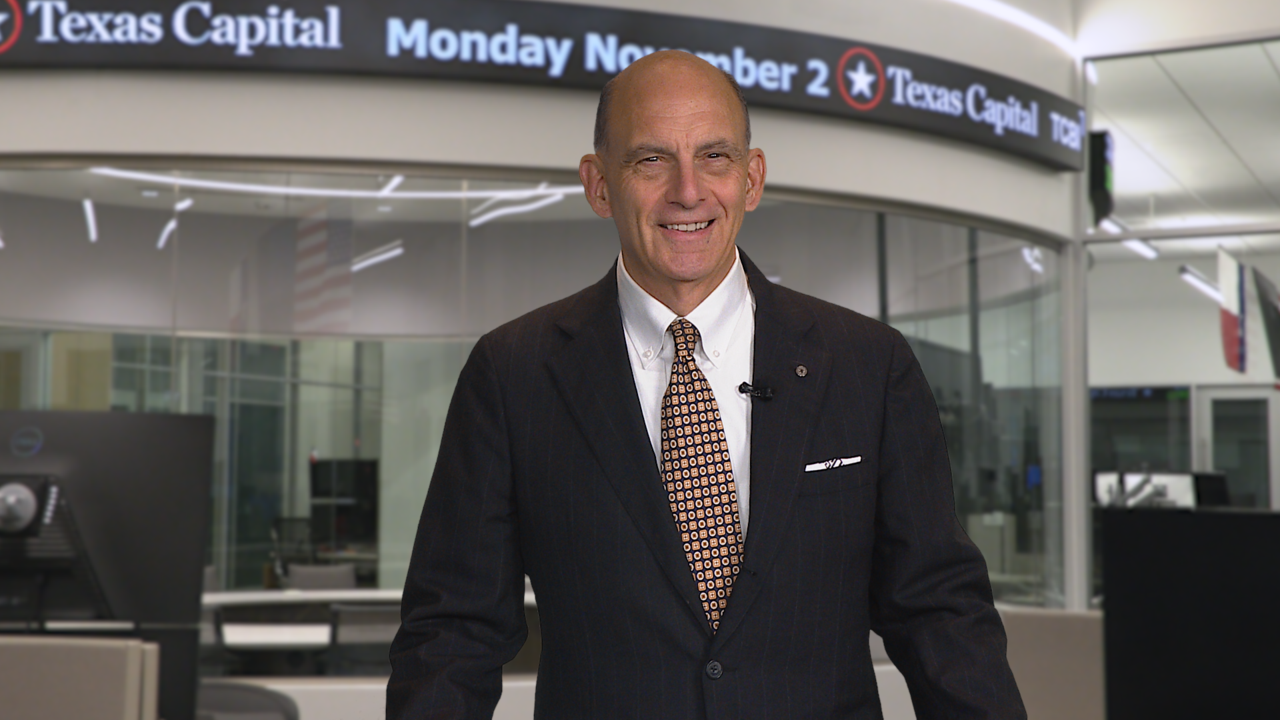
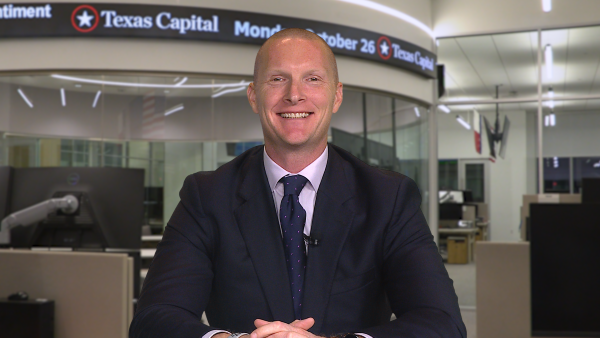
Hi. I'm Tim Gereg, Head of Capital Solutions at Texas Capital.
Last week, the market was expecting a hawkish pause from the Fed's penultimate meeting of the year. We got the pause, but not the hawk. After a unanimous hike in September, the committee held steady last week at 3.75% to 4% with two dissents, Cook and Hammack, both in favor of another 25 basis point hike. The statement did upgrade its view of the economy, changing the language slightly from solid to strong. Beyond that, the press conference was fairly uneventful and light on detail, though in fairness, that's probably how the chairman wants it.
The one piece of real news was a change to the meeting schedule. Starting in fall of next year, one of the eight meetings per year will be devoted strictly to "broad monetary policy strategy," with no rate decision or policy statement. In 2028, that will increase to two of the eight meetings per year.
Going into the meeting, one question that was on everyone's mind was, if inflation has been above target for nearly six years, growth is above 3% and the labor market is still hanging on, why not hike again now? Not surprisingly, that was the first question asked at the press conference.
The chairman's answer was a bit hazy, as he attempted to remain resolute on the Fed's commitment to price stability, while also defending why consecutive hikes weren't needed. Specifically, Warsh gave a three-pronged answer. First, he reconfirmed the Fed's 2% inflation target. Second, reconfirmed that the responsibility for hitting that target remains squarely with the Fed. And third, stated that the Fed has already laid out their framework of how they would approach monetary policy going forward. The lack of any new or substantive detail was a bit reminiscent to July's press conference, when the market was looking for assurance that the Fed was committed to fighting inflation but didn't deliver.
My sense is that if the Fed had not already hiked once in September, this meeting would have been received in roughly the same manner. The market agreed, as 2s10s had their biggest one-day steepening move since the July meeting, over 10 basis points from the flats on the day, but finished six basis points steeper; 2s10s ended the week at +33 basis points with the 10-year at 4.92%. On Thursday of last week, we also got our usual round of monthly inflation and GDP data, which didn't make the case for pausing any easier. Q3 GDP came in above estimates at 3.4%, and core PCE ticked up to 3.1% with headline at 3.6%. My sense and the common view across the market is that it's a very high bar for the Fed not to hike again in December. Assuming the Fed retains in every other meeting cadence of hikes, I see a reasonably good chance for another hike in March unless something dramatic happens in the economy and likely a protracted hold from there.
Of course, all of that is subject to near- and medium-term catalysts of this week's U.S. midterm elections and monthly labor market data, developments out of France and the EU and, of course, the ongoing war in Iran. Front month WTI is down this morning to $97, as Iran's supreme leader has granted the government authority to hold peace talks. That's it for this week. Let us know if we can help.
Connect with an expert banker.
Experience more with skilled bankers who are committed to helping you grow.
Additional Insights
Economy
Market Insights Recap — Week of November 2, 2026
<p>Watch the Market Insights video for the week of November 2, 2026, from our expert, Steve Orr.</p>

Economy
Standing still while prices rise — Fed Meeting of October 28, 2026
<p>Still fighting inflation but not this week…</p>
Economy
Investment Insights — Week of October 26, 2026
<p>Watch the Investment Insights video for the week of October 19, 2026, from our expert, Tim Gereg.</p>