Market Insights Recap — Week of December 29, 2025
Video
Hello. I'm Steve Orr Chief Investment Officer for Texas Capital's Private Bank.
A bow on 2025. And what we're thinking for 2026. So let's dive in. I covered the big asset classes last week, but I wanted to throw in some final thoughts.
Economy-wise, the third quarter GDP estimate of 4.3% may get revised slightly lower, but it's still going to be well above our 3% thinking. That 4.3% pace is the fastest expansion in two years. And the fourth quarter should end up around 3%, also making 2025 a solid 2.5% plus growth. A growing economy produces positive earnings growth for companies, and we think 2026 will see a repeat of 2025's earnings growth, with low double-digit increases for the tech-driven S&P 500. Double-digit earnings growth with no change in price multiple produces around 7600 for the S&P index, or a respectable 9% gain.
Now, how about our paths for the economy in 2026? Let's tackle low, base and high in order. Let's get the bad news out first. There's not been a recession in the modern era when corporate earnings growth is positive. So unless corporate credit and earnings grind to a halt, no recession next year. Well, what are the odds? Since World War II, recessions have occurred almost one out of every five years. So 20% is kind of a baseline. A 25% odds is about as low as you can go to account for any kind of outlier events, like Trump's tariffs were a big outlier. But remember markets rebounded smartly last year. Sniffing out the tariffs would need a long negotiation ramp. Now that 25% low-case comes with 3 to 4 Fed rate cuts. As the Fed would scramble to stem the slowdown. Long-term rates move very little as global competition for capital increases. Remember, most central banks are raising rates to try and fight inflation in their countries. A slowing economy would pull inflation lower as consumption slows, but would stay north of that Fed 2% target.
Precious metals continue to soar and the five major wars become six. With the addition of Venezuela. Any slowdown would take several months to manifest itself, with rising jobless claims and credit concerns percolating into the news headlines. Our indicator dashboard would start dialing back higher-risk and event-sensitive assets.
Now our base case, or what should happen versus what could happen. And it's a 55% probability. Now that may sound high, but it reflects the fact that since the government virus shutdowns five years ago, deficit spending and improving profit margins have narrowed the range of outcomes for the economy. Profit margins are near records, long-term interest rates are at reasonable levels, and some amount of sanity is coming to the tariff situation.
The sluggish payroll reports of the fall reflected DOGE payout reductions and immigration slowdown. We think once businesses get a handle on tariffs, they're going to turn their attention to deregulation efforts in the administration and coming tax breaks from the One Big Beautiful Bill.
Europe is starting to stir thanks to Germany getting serious about defense and export competition from China. China's property struggles will still continue to drag on its growth. But like Japan, the Communist Party there is trying to stimulate their economy.
Now we wonder when DC and the Fed will admit that 3% inflation is the new baseline and abandon that 2% target. We think apartment rents flowing through the calculation of CPI will temporarily depress readings early in the year. But over the medium term, the inflation level is going to be closer to 3.5% than 2.5%. One more Fed rate cut puts the committee squarely in their neutral range. We think you should not be surprised if talk turns to rate hikes late in the year, as the economy does better than expected.
Well, what about good news again? What could happen?
A 20% chance of 4% growth all year long could happen. Deregulation would get going in earnest. And the tax cuts from the One Big Beautiful Bill that kick in in mid-February, they're larger than expected, spurring consumer spending. Oil supplies remain plentiful and help lower headline inflation. A Russia peace deal and Venezuela calming down reduce China's influence in all five major wars. Interest rates do not change much, helping investors earn the coupon on their bonds. Stocks like stable money and lower inflation that powers earnings higher, producing a 20%-plus return for the third year in the last four. Hey, it's happened before.
So let's wrap up. Our base case for 2026. 3% GDP growth, 3 to 3.5% inflation. S&P 500 earnings 10 to 12%. Producing near that level in returns. Fed funds end next year around 3.5%. Consumer spending running at inflation. Wage growth rebounding to three and a half, maybe even 4%. Stocks are going to struggle in the middle of the year. Very typical for a midterm year but rebound higher in the fall.
Not bad at all. Happy New Year.
Connect with an expert banker.
Experience more with skilled bankers who are committed to helping you grow.
Additional Insights
Economy
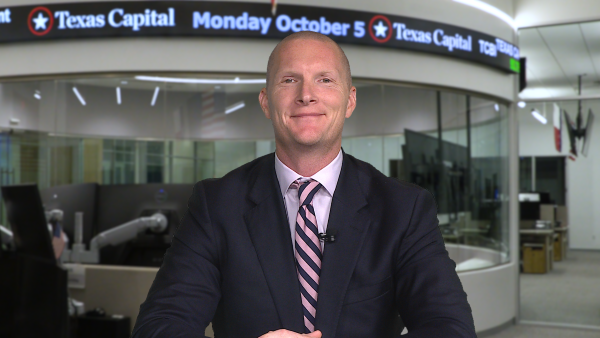
Investment Insights — Week of October 5, 2026
<p>Watch the Investment Insights video for the week of October 5, 2026, from our expert, Tim Gereg.</p>
Economy
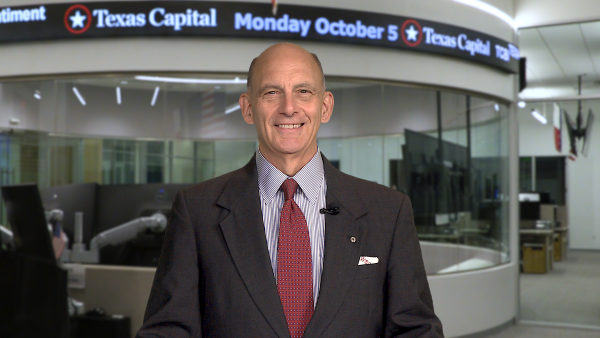
Market Insights Recap — Week of October 5, 2026
<p>Watch the Market Insights video for the week of October 5, 2026, from our expert, Steve Orr.</p>
Economy
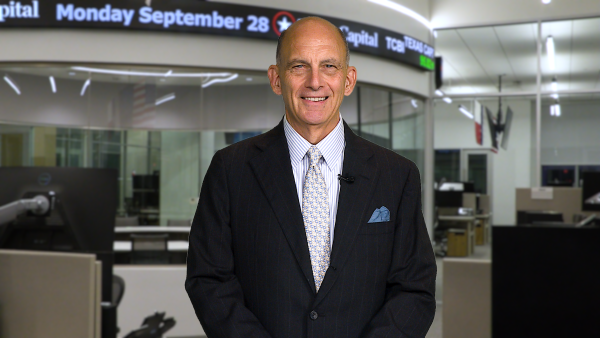
Market Insights Recap — Week of September 28, 2026
<p>Watch the Market Insights video for the week of September 28, 2026, from our expert, Steve Orr.</p>