Market Insights Recap — Week of January 19, 2026
Video
Hello, I'm Steve Orr, Chief Investment Officer for Texas Capital's Private Bank.
Climbing out. More still waiting. And policy updates. What do they mean for our portfolios?
Economists are crunching November and December data, and across the board, the numbers are better than expected. Housing starts, housing affordability and New York Fed manufacturing numbers show the U.S. is climbing out of a summer slowdown. No doubt the government shutdown in the fall slowed activity a bit, but those effects are usually reversed a quarter later. So, we should see fairly strong numbers for the economy over the next several months.
Now consumer price index inflation held steady at 2.7% last month, held down by steady-to-lower prices at the gas pump. But we still approach CPI and producer prices with a degree of suspicion. Our checkbook says food and healthcare prices continue to rise faster than the CPI’s 2.7% annual rate. Example: Ground beef prices hit $6.59 per pound last month. That's a 39% rise in four years, or 9.7% a year. I have a beef with that.
Encouraging economic news also eases pressure on the Fed to lower short-term interest rates. A rate cut after next Wednesday's Fed meeting is off the table. Futures markets are still projecting two cuts this year, starting in the summer. But we continue to believe that the economy's plenty strong enough and doesn't need lower rates. Back in the long end of the yield curve, 10- and 30-year interest rates are crawling higher around the globe. Other central banks are fighting inflation, and governments are taking on debt to try and stimulate their economies.
Supreme court has also been fairly quiet. The court is holding oral arguments on various cases, but it's also issuing opinions right now. And we thought the last two weeks we'd get the court's ruling on the Trump administration's use of the IEEPA statutes for tariffs. Now, we think the court will say using the statute was inappropriate and that the administration is going to have to find some other justification to impose tariffs. So what next? We think there's a wide range of outcomes as to whether the tariffs will be paid back, rebated as tax credits or held as prepayments on the coming section 201 and 232 tariffs. Time to place your bets.
Earnings season is off to a good start with revenue and earnings per share beats ahead of average. Last week's big bank results were a mixed bag. Some good, some just OK, but none bad. This week we're going to get report cards from Netflix, United Airlines, Schwab and General Electric, among others. Worth noting: Our tactical dashboard pushed us to an overweight in both small-cap and emerging markets over the last several weeks. Overall, stocks remain in uptrends. They are kind of testing trend lines. Since we're just getting into the heart of earnings season, we're going to stay invested for the time being.
Now finally, let's summarize policy here a little bit. Congress sets the rules for cross-border trade. States set rules for corporate governance. And both set tax policy. So it's good to review where we're at in policy.
Fiscal policy. That's tax and spend by legislatures and Congress. More states are cutting taxes than raising. Only the blue states are raising or attempting to raise. The One Big Beautiful Bill impact is going to start next month with individual tax refunds. And then there's a lot of corporate changes coming later in the year.
Monetary policy. That's interest rates, Fed and inflation. The last Fed action was a cut. So they're in easing mode. Thanks to Congress spending, the Treasury keeps issuing more debt. That's deficit spending. The Fed buys that debt creating money into the banking system that's called M2. M2 is growing at 4.5%, keeping inflation well above the Fed's 2% target.
Credit policy. Congress, regulators and markets. Easier credit if banking regulators lower restrictions on the supplemental liquidity ratio, should happen later this spring. That's going to free up more capital for the banks to lend. And there's a lot of money available in the private credit markets.
OK, let's summarize. All three policies, they're in stimulus. Rarely if ever before in our lifetimes have all three been in stimulus mode. Usually one's negative, one's neutral, one's positive and they kind of mix and mingle. So despite all the noise, I think it's going to be a good year for the economy; 'til next time.
Connect with an expert banker.
Experience more with skilled bankers who are committed to helping you grow.
Additional Insights
Economy
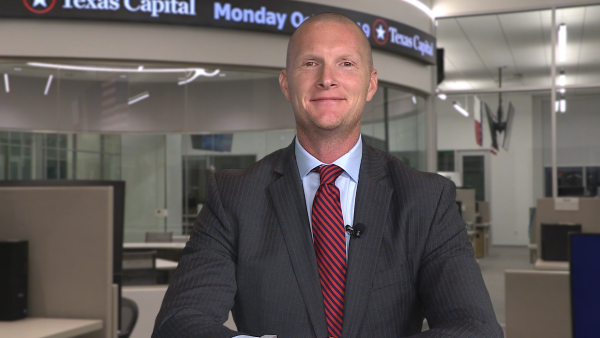
Investment Insights — Week of October 19, 2026
<p>Watch the Investment Insights video for the week of October 19, 2026, from our expert, Tim Gereg.</p>
Economy
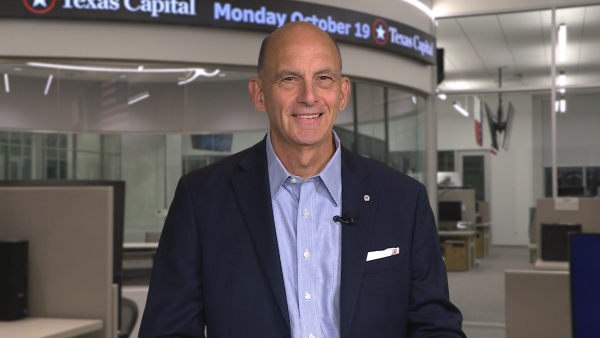
Market Insights Recap — Week of October 19, 2026
<p>Watch the Market Insights video for the week of October 19, 2026, from our expert, Steve Orr.</p>
Economy
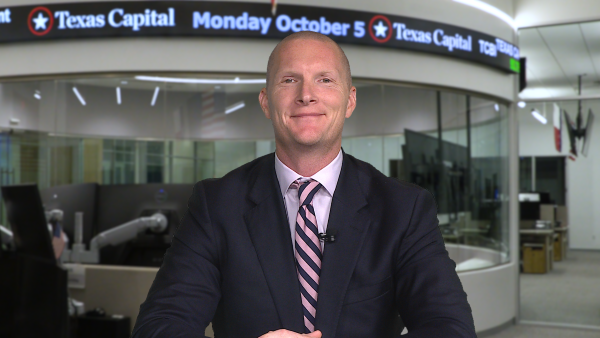
Investment Insights — Week of October 5, 2026
<p>Watch the Investment Insights video for the week of October 5, 2026, from our expert, Tim Gereg.</p>