Mortgage-Backed Securities Insights — Week of March 30, 2026
Video
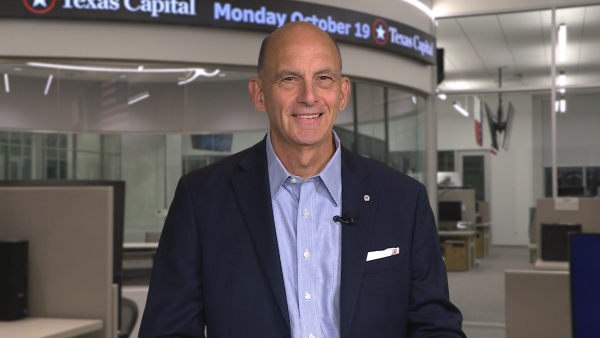
Hi, I'm Jerry Levy, Managing Director of Texas Capital's Mortgage Securities Sales & Trading.
Market stress, volatility and reacting to headlines continue to dominate MBS trading. By the numbers the MBS market has given back approximately one-third of the affordability gains that have been made since mid-last year. The 30-year mortgage rate this morning is 6.64%, and that's almost exactly the 6.65% average from 2025. And that's about 70 basis points wider than the 5.95% rate, which we touched at the end of February, beginning of March.
The 10-year U.S. treasury approached 4.5% last week; think of 4.5% as the rate that correlates to a 6.5% 30-year mortgage. When we were at a 4% yield, that correlated to a 6% mortgage rate given where the U.S. Treasury curve and basis are trading right now. At 6.5% 30-year rates, we have basically ended the refinance wave that we were enjoying earlier this year. One estimate has said just 20% of the 2023 to 2026 mortgage vintage has an economic incentive to refinance right now, and that's down from 70% for those vintages just a month ago. As of today, this represents just 6% of all outstanding mortgages have an economic incentive to refinance.
This has implications, of course, for agency issuance. We ended the month down 20% for the weekly average from the rate that we have just entering March alone. A continuation of the Iran conflict is also a headwind for home purchasing. A leading forecaster has now dropped their estimate of a 4.3% increase in home purchases for this year, and cautioned that it will drop approximately 1% overall for each of the next four months, meaning that if this conflict continues through the end of June, we're now in the peak traditional homebuying period, home sales will be at best flat to 2025's levels, which we know were a generational low.
Margin and demand pressures are also building on homebuilders. KB Home's CEO reported last week that sales softened at the end of March. They had a good January and February, but overall, gross profit margins contracted to 15.3% from 20.2% in Q1 from a year ago, and the average selling price for KB declined to 452,000 from 500,000. He touted KB's renewed emphasis on custom homebuilding rather than building for inventory, and this is not an encouraging take on increasing the supply of new homes overall for sale in the U.S.
U.S. Treasury auctions last week were both noticeably weak and, for some, called into question the ability of the market to fund the $14 trillion of investment-grade issuance needed in 2026 if you include the $2 trillion of corporates, the $2 trillion budget deficit and the already existing $10 trillion in treasuries that needed to be refinanced.
This is jobs week. It will culminate in Friday's unemployment report and a weaker number, when combined with the anecdotal reports of global slowdowns, due to energy and commodity shortages, may tip the economic slowdown thesis to encourage buying of U.S. treasuries. There is room for a snapback rally, as we have gone from a forecast of three rate cuts in 2026 to, at present, a 20% probability of a rate hike by October. This range of outcomes view is reinforced by a survey of MBS investors when they were asked, where do they see the basis moving in the next month? Seventy-five percent said it will move more than 10 basis points from the 132 basis point level we are right now, which, by the way, is the year-to-date high. Forty-three percent said it will move lower, 32% it will move higher. Thank you for listening. Until next time.
Connect with our team.
Experience more with skilled bankers who are committed to helping you grow.
Additional Insights

Economy
Investment Insights — Week of October 19, 2026
<p>Watch the Investment Insights video for the week of October 19, 2026, from our expert, Tim Gereg.</p>
Economy
Market Insights Recap — Week of October 19, 2026
<p>Watch the Market Insights video for the week of October 19, 2026, from our expert, Steve Orr.</p>

Economy
Investment Insights — Week of October 5, 2026
<p>Watch the Investment Insights video for the week of October 5, 2026, from our expert, Tim Gereg.</p>