Investment Insights — Week of October 26, 2026
Video
Hi, I'm Tim Gereg, Head of Capital Solutions at Texas Capital.
This week, all eyes are on the Fed. The two-day meeting wraps up on Wednesday. And market pricing is implying over a 90% probability that the Fed will keep the policy rate steady at 3.75% to 4%. The decision itself is unlikely to surprise anyone, but, as is the case with most of these FOMC meetings, the press conference should be the main event.
Remember, in September, the committee unanimously hiked 25 basis points. Since that meeting, we've seen the year-on-year CPI tick up from 3.4% to 3.7%, and PPI posted its biggest monthly gain since March of 2022. Not to mention, we will also get PCE data this week, which is forecasted to tick up to 3.1 and 3.6 for Core and Headline, respectively.
So, the obvious question for Chairman Warsh will be, why pause now after a unanimous decision to hike and inflation still moving in the wrong direction? Of course, it's too early to see the effects of a rate hike flow into the economy, but also, a single 25 basis point hike is not going to move any needles. So, why pause now? It's also worth remembering that an October hike was effectively taken off the table weeks ago, before September's inflation data was even released. Roughly two weeks before the data came out, New York Fed President Williams said there was "no need for urgency." And Vice Chair Jefferson said the committee "may need more time before deciding whether to raise interest rates again."
In my view, this raises a fair question about the motivation to hike in September in the first place, which was likely just as much about credibility as it was about the data. So, after a pause this week, I believe the committee will hike once more in December, potentially one more hike in the first quarter of next year and by the spring, the year-on-year inflation data should start to improve as the initial oil shock rolls off. So an extended pause from there.
As for the rates market last week, Thursday was the big day: A selloff in AI and chip stocks triggered in part by Meta's earnings and negative free cashflow, the first since their IPO in 2012, sparked a strong flight to quality bid in treasuries. The 10-year fell 16 basis points to 4.95%, and the two-year was down to 4.64%. Yields gave some of that back on Friday, partly due to a technical retracement and partly due to oil climbing on renewed tensions between the U.S. and Iran.
Brent crude settled Friday at $116.72, its highest since April, and over 6% higher on the week. WTI ended the week just over $103. So all in, the 10-year Treasury finished the week down seven basis points to almost exactly 5%. The two-year was roughly unchanged at 4.69%. 2s10s flattened about six basis points to just over 30 basis points. So as we're digesting what appears to be a more patient Fed, the market is starting to remove some of the hikes that were priced in earlier. If that continues to be the case, it feels like the front end still has some room to rally.
Meanwhile, there are plenty of forces keeping the long end elevated: fiscal concerns, heavy corporate debt issuance and global yields of most developed countries sitting in multi-decade highs. After Wednesday's Fed meeting, Thursday we'll get the advanced look at third quarter GDP data and September's PCE, with the midterms one week from tomorrow. That's it for this week. Let us know how we can help.
Connect with an expert banker.
Experience more with skilled bankers who are committed to helping you grow.
Additional Insights
Economy
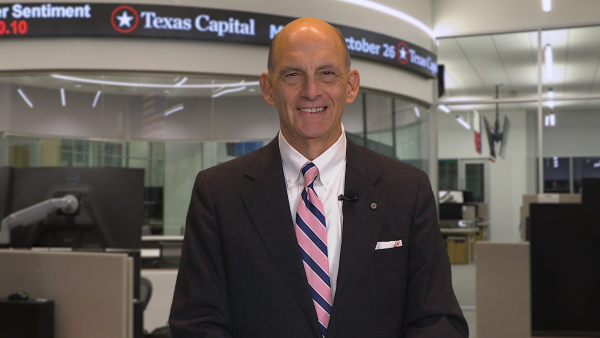
Market Insights Recap — Week of October 26, 2026
<p>Watch the Market Insights video for the week of October 26, 2026, from our expert, Steve Orr.</p>
Economy
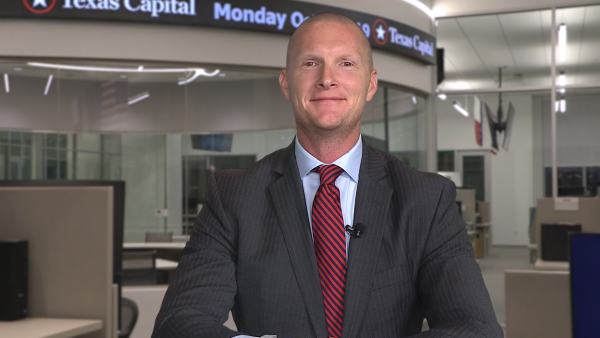
Investment Insights — Week of October 19, 2026
<p>Watch the Investment Insights video for the week of October 19, 2026, from our expert, Tim Gereg.</p>
Economy
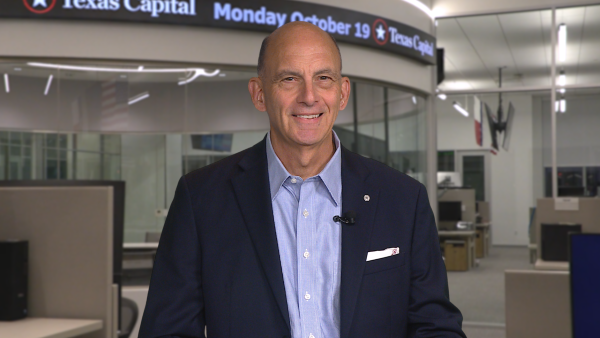
Market Insights Recap — Week of October 19, 2026
<p>Watch the Market Insights video for the week of October 19, 2026, from our expert, Steve Orr.</p>