Market Insights Recap — Week of March 23, 2026
Video
Hello, I'm Steve Orr, Chief Investment Officer for Texas Capital's Private Bank.
How long? What's up today and what's next? These are all questions we ask every day around here.
We monitor the five biggest wars going on around the globe, or that are percolating. The rankings change from time to time, but the bad guys only change about every five to 10 years. Iran versus everybody moved up to number two on February 28th. Roughly 20% of daily oil movements and liquefied natural gas is tied up in the Persian Gulf thanks to drone and missile strikes from Iran. The question on all of our minds is how long will there be no traffic through the Strait of Hormuz? Now, we certainly don't have a crystal ball. But reading between the lines, we do think both sides are looking for an off ramp to stop the artillery phase, let's call it, sort of a last century lobbing of smart shells and drones and missiles back and forth.
Most buyers of crude from the Persian Gulf countries have some amount of oil reserves on hand, but much less or zero reserves of liquefied natural gas. And Asia generates most of its electricity using liquefied natural gas. If crude oil prices stay north of $103 for the rest of 2026, we expect global economic growth to slow by as much as a half a percent. That may not sound like much. We only expected about 2.5% growth around the world for 2026. Two more weeks of back and forth attacks would fall into those early estimates of 4 to 6 weeks that were batted around by the experts early on.
Our first concern is personal safety and then future earnings. It's going to take weeks and, in some cases, months to restart refineries and loading operations on the Gulf, and at least that long to unsnarl supply lines. Less remarked, but very important, are fertilizer plants in the region. One-third of global fertilizer exports go to the Strait, mainly to India, Brazil, Africa and Asia. Helium for computer chip manufacturing also passes through the Strait. So even more important to the 100 million-plus people living on the west side of the Persian Gulf are the dozens of water desalinization plants guarding those from attack, maybe just as high a priority. So how long? We don't know. But Iran looks to be playing the wait 'em out game for sure.
A high priority here at home is how the war will affect our portfolios. Already, gasoline is a dollar higher in most regions. This is going to show up in fuel cost in next month's Consumer Price Index, and later in the cost of goods and services, because most everything we buy relies on diesel or gasoline to get to us. Right now, markets are pulling back. Traders are kind of taking risk off the table. We already had plenty to worry about between tariffs and scattered loan problems in private credit. Our short-term indicators are decidedly neutral, our longer-term indicators still green. More on that in a moment.
So up next is just more waiting, at least for the Federal Reserve, that is. They chose to leave short-term rates unchanged last week. They did point out that the Gulf War creates uncertainty for the economy. Well, yeah. Chairman Powell also pointed out in his press conference that he's not going anywhere until Warsh is confirmed. That could be beyond when his chairmanship term expires after the May meeting. So there's the making of another confrontation with the administration. Overall, markets took the Fed's report as a sign they will not be cutting rates anytime soon.
OK. We covered the present situation and what we know of the outlook. We can safely say we're in a consolidation phase with a short-term downtrend. That fits the historical pattern for March and for midterm years. The war uncertainty has made traders pull back on positions, forward revenue, earnings and margin estimates, they continue to push to new highs, however. At this point we're just getting lower valuation multiples. Think price earnings ratios coming from 23 down to 20ish. That means a better entry point when the smoke clears. So stay patient. Look beyond the noise; 'til next time.
Connect with an expert banker.
Experience more with skilled bankers who are committed to helping you grow.
Additional Insights
Economy
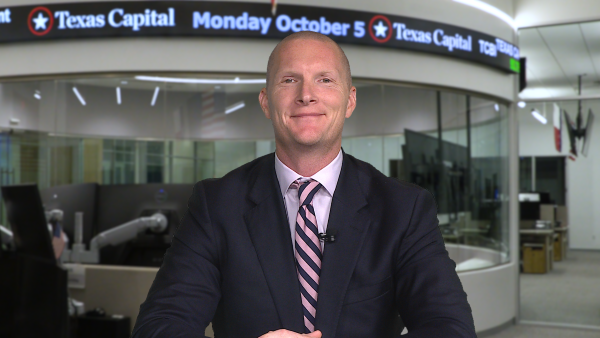
Investment Insights — Week of October 5, 2026
<p>Watch the Investment Insights video for the week of October 5, 2026, from our expert, Tim Gereg.</p>
Economy
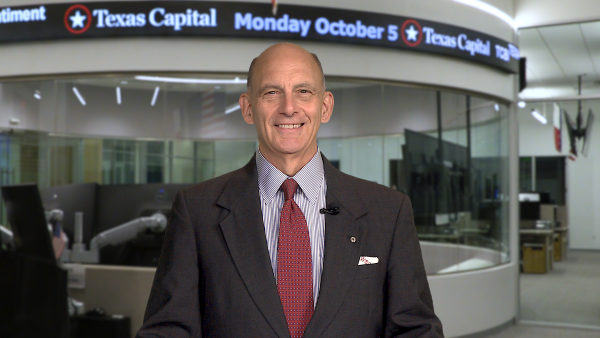
Market Insights Recap — Week of October 5, 2026
<p>Watch the Market Insights video for the week of October 5, 2026, from our expert, Steve Orr.</p>

Economy
Market Insights Recap — Week of September 28, 2026
<p>Watch the Market Insights video for the week of September 28, 2026, from our expert, Steve Orr.</p>