Mortgage-Backed Securities Insights — Week of April 13, 2026
Video
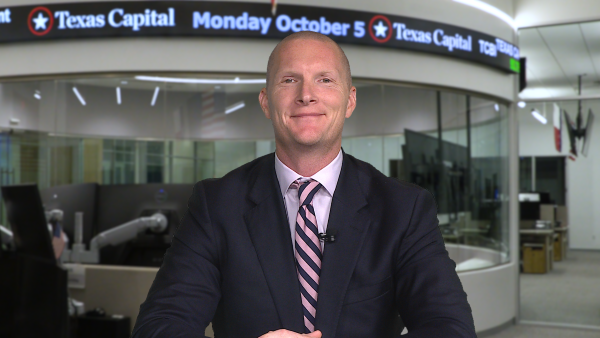
Hi, I'm Jerry Levy, Managing Director of Texas Capital's Mortgage Security, Sales & Trading.
War normal is the new normal as daily trading is led more by event headlines than underlying economic data. How volatile have we been? Brent oil opens up this week up $8 to $104, but that is $6 less than last week's high on the blockade of the Strait of Hormuz and the lack of a permanent ceasefire agreement over the weekend. CPI reported last week in the mid 3s and core at 2.6%. Those are still both above the Fed's 2% target, but relatively well-contained so far, given the dual effects of last year's Liberation Day tariff shock and this year's oil shock. If the conflict is not resolved in the next 90 days, however, we may see a global demand shock as economic growth is revised downward in both Europe and Asia for 2026, with economic activity choked off by the effects of fuel, fertilizer and commodity shortages. This is already showing up. Japan's bond yields, for example, hit their highest level since 1997, as Japan is particularly dependent on imported oil and the supply side energy price shock rocks the economy.
In the U.S., the prospect of a slowdown in consumer spending is not that far-fetched. Last week, the University of Michigan consumer sentiment data was reported with a drop to 47.6. Consumers now feel worse about their prospects than they did at any time since the hostage crisis of 1980, the Iraqi invasion or at any time during the Covid pandemic. Job data in the U.S. has not yet turned. U.S. payrolls reported higher than expected in March, with positive JOLTS and less negative Challenger layoff numbers.
Thirty-year mortgage rates are 6.25% to 6.375%, down 11 basis points in a week and almost 50 basis points down from the recent highs, as the current coupon opens this week at 5.27%, down from 5.54% 10 days ago. Notably, MBS basis tightened another five basis points last week to 112 basis points, which is 18 basis points lower than the 130 basis point year-to-date high. This is important, as it is the primary driver of mortgage rates dropping as investor demand for MBS drove outperformance last week, with supply contracting in the last month due to the higher rates.
We are back under the important 6.5% refi threshold that drives refinance activity here. As a reminder, 20% of agency loans made in the last three years have an incentive to refi at 6.5%. But at 6.38%, that increases to 35%, and at 6.25%, that moves to 40% of all those loans that were made in the last three years. And refinance activity drives origination. In the middle of February, newer agency origination was averaging about 4.5 billion per day. By the end of February, it had declined to 4 billion, and that held up into March. At March 2030, it was 3.8 billion. By April 7, we had dropped to 2.6 billion daily for the week. Last week, with the rate and basis rally, we rebounded higher again to almost 3.5 billion. Look for a continued boost in refi activity, which will drive agency origination higher this month, hopefully back to February's levels.
U.S. treasuries have actually been trading in a stable range. The 10-year remains between 4.20 and 4.50, and the curve has flattened. We are currently at 53 basis point 2s/10s and 111 basis points 2s/30s, which is about 25 basis points flatter since the outbreak of hostilities.
A note on hedging: For mortgage originators, hedging with TBAs has become more difficult and expensive. Last week, for example, Ginnie bid offer spreads widened to an eighth of a point. UMBS bid offer spreads more than doubled to between 2 to 3 ticks. With the selloff, the 6.5% coupon came back online as a hedge and origination coupon. That means we are now actively trading a hedging range from the 4% to 6.5% TBAs. That's a historically wide range with wide bid offer spreads and volatility increasing hedging costs for all.
The Fed remains on hold; wait and see is where we are right now, and the futures markets don't forecast a Fed move until late in the fourth quarter at the earliest. Chairman Powell remains chairman, and Warsh has not even filed his paperwork for his Senate confirmation to be even eligible to be appointed as the new Fed chairman. Thank you for listening. Until next time.
Connect with our team.
Experience more with skilled bankers who are committed to helping you grow.
Additional Insights
Economy
Investment Insights — Week of October 5, 2026
<p>Watch the Investment Insights video for the week of October 5, 2026, from our expert, Tim Gereg.</p>

Economy
Market Insights Recap — Week of October 5, 2026
<p>Watch the Market Insights video for the week of October 5, 2026, from our expert, Steve Orr.</p>

Economy
Market Insights Recap — Week of September 28, 2026
<p>Watch the Market Insights video for the week of September 28, 2026, from our expert, Steve Orr.</p>